
So many melons! And the Delta-Mendota Canal

Updated: Jul 27

I’m a year and a half in to being elected to the Santa Clara Valley Water District, and for those of you following along, you know that I’m super interested in a few things:
As a democracy freak, I hope to translate and communicate what I’m learning to increase constructive civic engagement in water issues
And specific to this blog, to continue to better understand the dynamics between agricultural users and urban users.
On that second bullet, here’s part of the reason why. Overall, in the water world, you’ll hear these two statements:
California agriculture uses 40% of the state’s water, cities, 10%
California agriculture is the breadbasket of the world
It is a bit unfair to attribute that 40% to ag without acknowledging that ag benefits city dwellers but setting that aside, we at Valley Water are pushing hard on you all to conserve. And, the state has passed policies to push us all in that direction.
I’m a huge proponent of conservation but staff tells us we can’t conserve our way out of our water supply constraints. This is in part because we’ve already wrung out the sponge in terms of indoor water use efficiency. (There’s still lots of room for improvement on outdoor water use so quick plug for our landscape rebate program here.)
Given this context, naturally, some point fingers at ag and say, "but they are using up soooo much more water than we are." While I too like to point fingers elsewhere, before jumping to conclusions, it’s probably a good idea to learn more and better understand the water picture in California from agriculture’s perspective.

So, when I was at an ACWA (Association of California Water Agencies) conference and Cannon Michael of Bowles Farming Company invited me on a tour of his farm in Los Banos, I eagerly accepted.
Funfact: For those of you who read this blog, you saw that I recommended the book, “The Dreamt Land.” In it, the reader learns about this guy, Henry Miller, one of the most important people in the history of water development in California. Cannon Michael, CEO of Bowles Farming Company is his great, great, great, grandson. Read the book for more. Cannon also recommended the book “Industrial Cowboys” which I have added to my reading list.
There are other reasons to visit with the CEO of Bowles Farming Company as well. Why? First a refresher.
Water Supply in Santa Clara County
Remember that 50% of Santa Clara County’s water is imported, meaning it comes from outside of the county. It falls from the sky in the Sierras and makes its way to us through the Bay Delta and from Hetch Hetchy Valley, ultimately transported by canals. (The blog on a proposed pipe to complement our existing way of moving water from north to south is here.)
There are two main arteries moving water from north (the Bay Delta) to south, the California Aqueduct probably being the most known, a shimmering band of water seen from I-5. The shorter of the two, and the one of concern for this blog is the Delta-Mendota Canal.

The Delta-Mendota Canal connects to the pumps at the southern end of the Delta and moves water to us. It also moves water to several other agencies and users including the ones in the picture below.
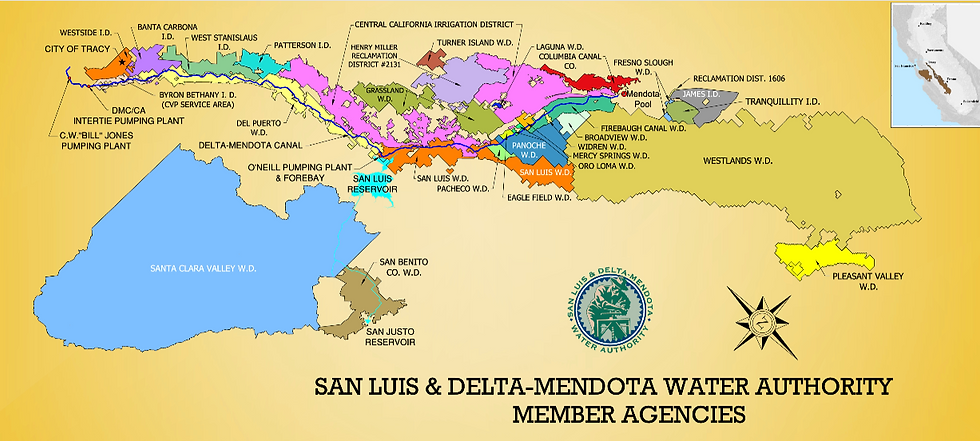
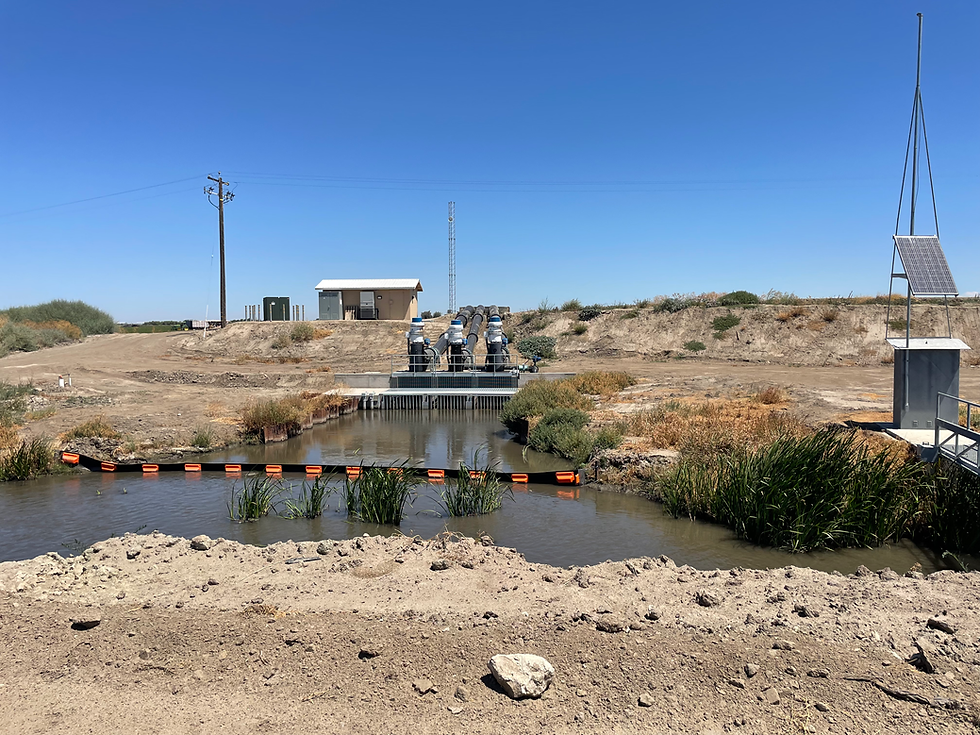
All of these agencies together have a vested interest in this 117-mile long canal and they come together in what is known as the San Luis & Delta-Mendota Water Authority (SLDMWA). This agency is tasked with operating the canal in order to dish up water to folks like us. One of the biggest projects right now that all these agencies need to resolve, in partnership with the federal government (because the canal is a part of the federal government’s water system called the Central Valley Project, CVP) is subsidence of the canal. It’s sinking due to overpumping of groundwater.
Governance of this agency is through a Joint Powers Authority (JPA) and we at Valley Water have two representatives on that board, Richard Santos and John Varela. Cannon Michael chairs the board. So, that’s another reason for a visit to the Bowles Farm. Relationships matter in order for these disparate agencies (ag and urban) to work together and complete important projects like fixing the canal’s subsidence.
He also plays another important role in what is called the San Joaquin River Exchange
Contractors Water Authority.

But first, a little refresher on one aspect of how Valley Water supplies water.
Semitropic Groundwater Bank
A little while ago, I wrote about a trip I took to Wasco California. There, I visited the place where Valley Water banks (stores underground) approximately 350k acre feet of water. In that blog, linked here, I talked about the importance of storage but that not all storage is equal. We store a lot of water in reservoirs and there are pros and cons to that. We also store a lot of water underground, which is great, but it can be a challenge to get that water back. Wasco is south of us and there is no mechanism to pump that water from south to north. So we rely on “exchanges.” This means, if someone doesn’t need water, it can get diverted to us and we give them our banked water for use at a future time.
Another way we fill in the gaps is through a “transfer.” The simple summary is that folks with more water than they need will sell it to others, like us. For Valley Water, this is an important back up plan if/when we’re short on water. As an example, during the 2021 drought when our water allocation (the amount of water we get from the state and federal government) was only 5 percent of our state allotment and 25% of our federal allotment, we were able to purchase 58k acre feet of transfer water.
Now you might ask yourself, how is it that some areas have more water than they need, in particular the areas farmed by Bowles and those who make up the San Joaquin River Exchange Contractors. This is where reading "The Dreamt Land" comes in again as Henry Miller secured some of the most valuable water rights in the state.
So, here we have one more way that Valley Water supplies water, in particular and importantly, when we need it most, in dry years.
Back to the farm tour
There were many highlights but since I have a tendency to write way too much for the average reader, (and kudos to those of you who are still with me) here are some highlights:

1) Sandcrawlers!

The first thing we saw was all the big machines that harvest crops. These machines are gigantic and are quite possibly direct decedents of Star Wars Sandcrawlers. The one that fascinated me the most was the one that harvests organic cotton. Instead of spraying chemicals, the machine blows hot air on the plant to dry the leaves so they break apart instead of staining the cotton, making for a cleaner harvest. Just one of these machines costs $1.2 million dollars.


2) Compost


Another part of the tour that was fascinating was seeing the compost piles. To reduce methane pollution, state law requires that we divert 75% of our organic waste from landfills by 2025. Bowles solution: Dedicate a square of farmland to take green and organic waste from municipalities and turn it into dirt. For my fellow compost-lovers, those of us fascinated with the process of creating beautiful, dark, soil, out of food waste, it warmed the cockles of my heart.
Habitat and Brood Water
One of the things that makes Bowles Farm special is their commitment to experimenting with different approaches to sustainability. A compost pile that provides a regional solution to organic waste is one element. Another is the creation of habitat for birds.
Bowles has transformed 650 acres of farmland into wetlands. As a part of the Pacific flyway, it offers a place of rest and refueling for birds. We saw lots of that fuel in the form of smartweed, a staple calorie source for waterfowl.
One important point Cannon made was that pulling all these elements together can also create tensions. Two examples he cited include:
While you and I may think it's beautiful to see a wetland nourishing healthy bird populations adjacent to melon patches, a food inspector sees it as an opportunity for poop on plants, leading to human sickness.
Keeping wetlands wet at the right times is important. One of those important times is bird breeding season, leading to me learn the term "brood water." During the summer is when breeding waterfowl need wetlands which is also the time of year when everyone else needs water. This can create tension between agriculture and the environment when water is scarce.
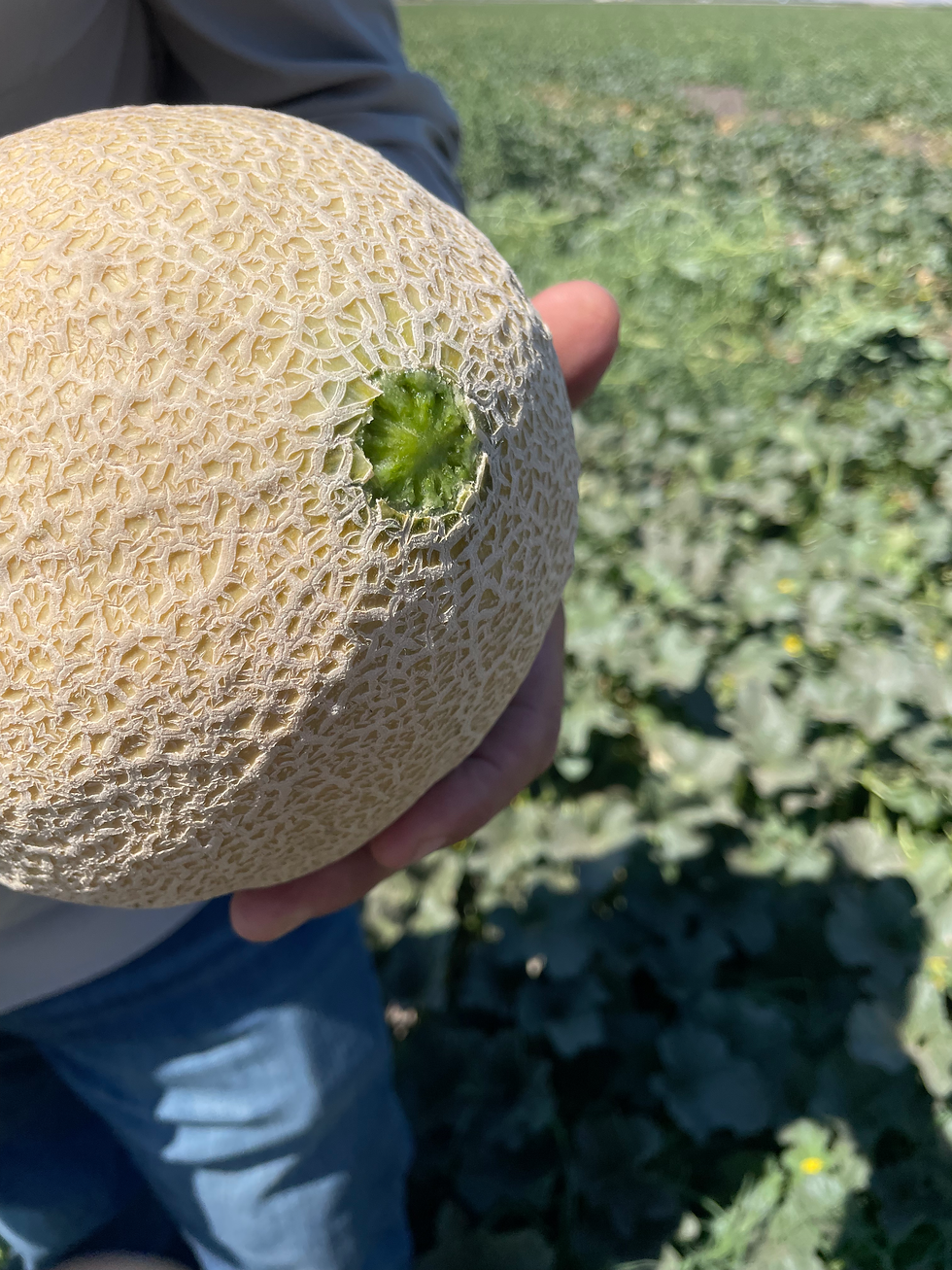
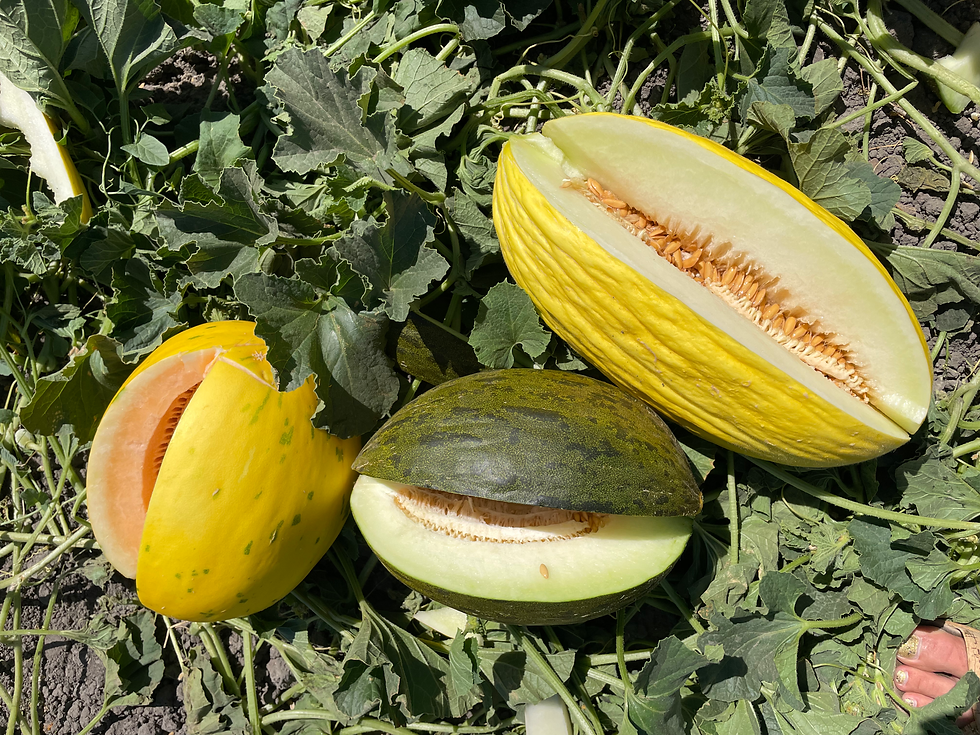


Overall, it was an amazing learning opportunity, one that gave me a deeper appreciation for those figuring out how to grow food within nature’s constraints. And as someone who has spent their career in policy advocacy, the visit solidified the way I have learned to approach tough problems. If change needs to be made, if we need to move more aggressively towards conservation, if we need to be more mindful of groundwater pumping, if we need to repair the harm we've done to the natural environment, and if we're adopting policies to force us to move in those directions, there needs to be appropriate on-ramps. People have livelihoods, habits, and investments, that, with the right amount of time and carrots, can help mitigate the scary parts of the needed change.
Thank you to Cannon for the great tour and for the seven different melons I took home with me. I’ve been eating soooo much melon since then and I’m convinced it provided me some super-food strength to beat my ride buddies to the top of Mt. Umunhum this past Monday.


Comments